Motorcycle Intercom Range: What Do "1km" and "2km" Really Mean?
You're shopping for a motorcycle intercom and you see "1000m range" on the box. Sounds great — that's a full kilometer, right? Enough to stay connected with your riding buddy halfway across town.
Not quite. That number on the spec sheet is a theoretical maximum under ideal conditions: line of sight, no obstacles, no interference, stationary, with fresh batteries. In the real world, your actual working range is usually 40–70% of that number.
Here's what you need to know to set realistic expectations and get the most from your intercom's range.
The Lab vs. The Road: Why Spec Range ≠ Real Range
Manufacturers test intercom range in open-field environments — flat terrain, no buildings, no other Bluetooth devices competing for the 2.4 GHz band, both units at head height. These are the absolute best-case conditions.
On the road, you're dealing with:
- Terrain: Hills, curves, and elevation changes block radio signals. A gentle curve in the road can cut your range in half.
- Obstacles: Vehicles, buildings, trees, and overpasses absorb and reflect 2.4 GHz signals. The rider ahead of you is already an obstacle.
- RF interference: Urban areas are saturated with Bluetooth devices, Wi-Fi routers, and other 2.4 GHz emitters. This noise floor degrades connection quality.
- Speed: At highway speeds, the Doppler effect and rapid position changes slightly reduce connection stability.
- Weather: Heavy rain and fog absorb RF energy, shaving another 10–20% off range.
Real-World Range Estimates by Spec Rating
Based on rider reports and field testing, here's what you can realistically expect:
| Spec Sheet Range | Open Highway | Urban / Suburban | Mountain / Forest |
|---|---|---|---|
| 800m | 400–600m | 200–400m | 150–300m |
| 1000m | 500–700m | 300–500m | 200–400m |
| 2000m | 800–1400m | 500–800m | 400–600m |
Notice the pattern: your real-world range is roughly 40–70% of the spec number, depending on environment. That's not a flaw in the product — it's the physics of 2.4 GHz radio propagation.
Bluetooth vs. MESH: Range Matters Differently
This is where the type of intercom technology makes a big practical difference — not in the point-to-point range (both Bluetooth and MESH use the same 2.4 GHz radio), but in how the range works in a group.
Bluetooth Intercom (Daisy-Chain)
Bluetooth intercoms like the SCSETC S9XM and S10X connect riders in a daisy-chain topology. Rider A connects to Rider B, Rider B connects to Rider C, and so on.
The advantage: each link only needs to span the distance between two adjacent riders. If riders stay within 300m of each other, a 1000m-rated Bluetooth intercom keeps the chain intact even across a total group spread of 1.5 km or more.
The catch: if one link breaks (Rider B goes through a tunnel), everyone downstream loses connection. And the more riders you daisy-chain, the higher the audio latency — by the 5th rider, voice delay becomes noticeable.
MESH Intercom
MESH intercoms like the SCSETC T2 Plus and S13 use a mesh topology where every unit can relay signals for every other unit. If Rider B drops out, Riders A and C auto-route through another path.
More importantly for range: MESH extends the total group coverage. With a 10-rider MESH group (T2 Plus), the effective communication footprint can stretch to 2–3 km total, because each rider acts as a signal relay. The group stays connected even when individual intercom distances exceed the rated range.
This is why MESH is strongly recommended for groups of 4+ riders — not because the point-to-point range is longer, but because the network self-heals and self-extends.
5 Ways to Maximize Your Intercom Range
Regardless of which intercom you own, these practices will push your real-world range closer to the spec sheet number:
1. Maintain Line of Sight
This is the single biggest factor. Radio signals at 2.4 GHz don't bend around corners. If you can see the other rider, your intercom can probably reach them. If there's a hill or building between you, the signal degrades dramatically.
In group rides, maintain visual contact whenever possible. On winding roads, the rider behind should close the gap before turns.
2. Mount the Intercom Correctly
The intercom unit's antenna radiates best when it's mounted on the left side of the helmet (the side facing the road in right-hand-traffic countries). This positions the antenna with the clearest path to the rider ahead.
Avoid mounting the unit too low — the helmet itself can partially shield the signal. The sweet spot is the lower-left rear of the helmet, as most manufacturers recommend.
3. Keep Units Away from Metal
Metal objects near the intercom unit — tank bags with metal frames, metal luggage racks, even a thick metal visor mechanism — can detune the antenna and reduce range. Keep the intercom unit on the helmet, not on the bike.
4. Close Your Visor
An open visor creates wind turbulence that degrades microphone performance and forces the intercom to use more processing power for noise cancellation, which indirectly affects connection stability. Close your visor for the best intercom performance.
5. Reduce Interference Sources
If you're riding in a city with heavy Bluetooth traffic, try switching your intercom to a less congested channel (if your model supports it). Also, avoid carrying your phone in a chest pocket right next to the intercom — two Bluetooth devices competing for the same space can degrade both connections.
SCSETC Intercom Range Comparison
Here's how SCSETC's current intercom lineup compares on range and technology:
| Model | Technology | Spec Range | Real-World Range (Highway) | Best For |
|---|---|---|---|---|
| S9XM | Bluetooth 5.3 | 1000m | 500–700m | 2–6 riders, budget-friendly |
| S10X | Bluetooth 5.3 | 1000m | 500–700m | 2 riders, ultra-long battery |
| S13 | MESH + BT 5.2 | 1000m | 500–700m (per link) | Up to 8 riders, self-healing |
| T2 Plus | MESH + BT 5.2 | 1000m | 500–700m (per link) | Up to 10 riders, premium MESH |
All four models share the same 1000m spec range — the difference is in how they use that range. Bluetooth models maintain it between paired riders. MESH models extend it across the entire group through signal relay.
When Range Really Matters
For most riders, 500–700m of real-world range is more than enough. You rarely need to talk to someone a kilometer away — group rides typically keep riders within 200–300m of each other.
Range becomes critical in these scenarios:
- Lead-sweep communication: The lead rider and sweep rider in a large group can easily be 500m+ apart. MESH intercoms handle this better because intermediate riders relay the signal.
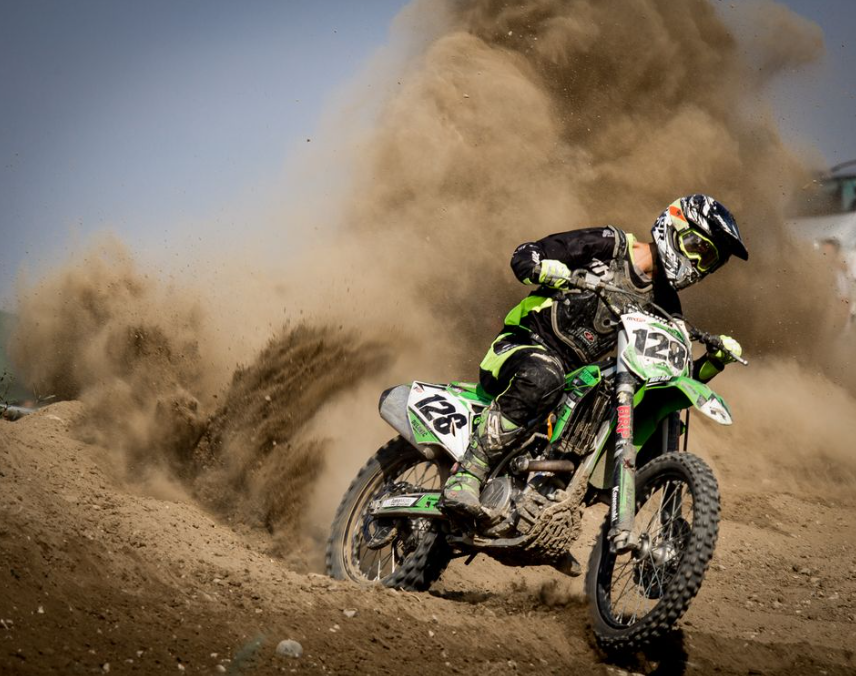
- Off-road and adventure riding: Dust, terrain, and spread-out formations push intercom range to its limits. Here, a 2000m-rated intercom gives you more margin.
- Emergency coordination: When a rider goes down or gets separated, maximum range can be the difference between reconnecting and losing contact entirely.
The Bottom Line
Spec sheet range is a useful comparison tool, but it's not a promise. For 1000m-rated intercoms, expect 500–700m on the highway and 300–500m in urban areas. For group riding, the technology matters more than the raw number — MESH intercoms like the T2 Plus and S13 give you better group connectivity at range because every rider extends the network.
Ride with realistic expectations, follow the range-maximization tips above, and you'll rarely be disappointed. Contact us if you need help choosing the right intercom for your riding style and group size.